
Ice Dam Removal and Roof Snow in Aurora, IL
An ice dam is a ridge of ice along the eave with water pooling behind it, and the damage is not the ice, it is the pool. Water backs up under the shingle courses, gets past the underlayment and runs into the wall cavity or the ceiling. Icicles look picturesque and are the warning sign.
Northern Illinois produces these reliably because we get the exact conditions required: snow cover, sub-freezing air, and attics warm enough to melt the underside of the snowpack.
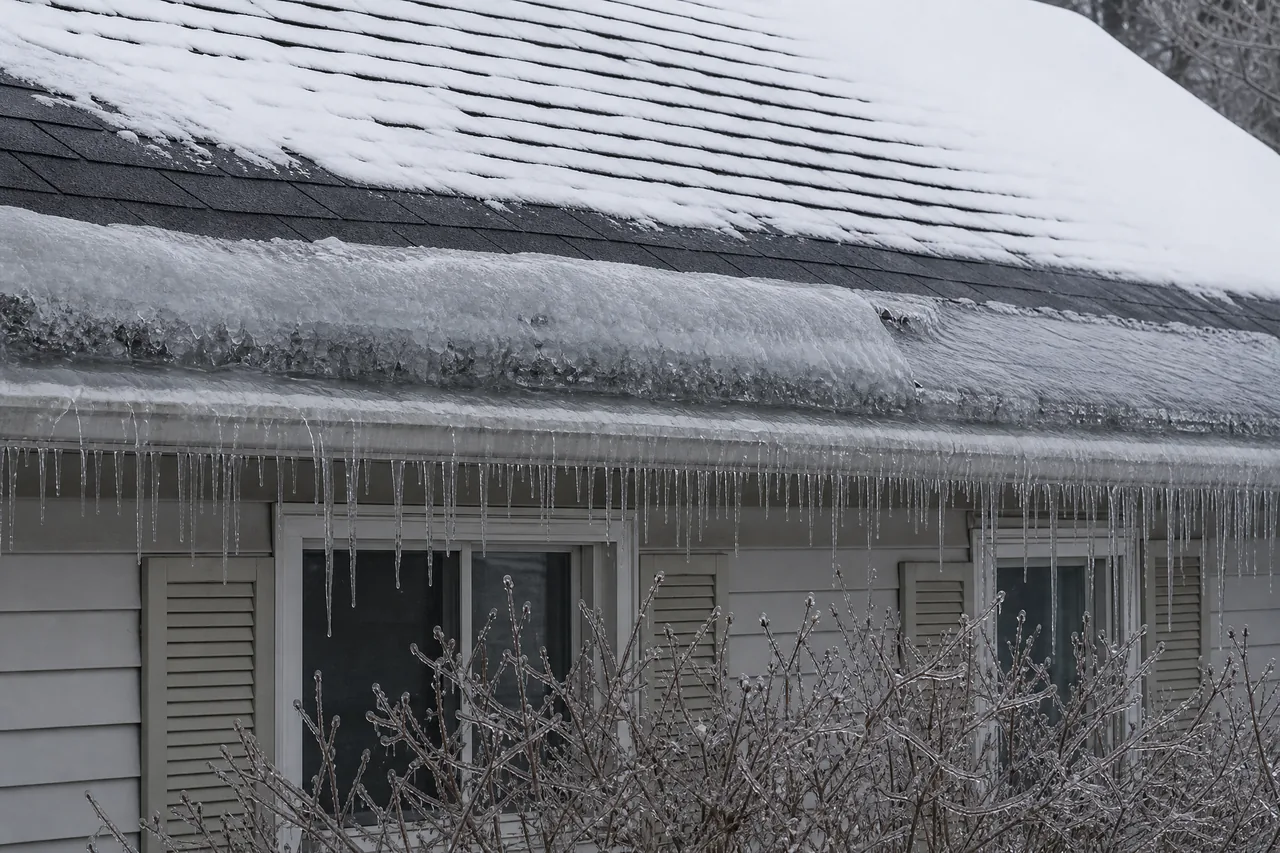
Getting It Off Without Wrecking the Roof
Steam. Low-pressure steam melts the ice out without touching the shingles. It is slower and it costs more than the alternatives and it is the only method we will use on a roof somebody intends to keep.
What we will not do, and what you should not let anyone else do either: chip it with a hammer or an axe, use a pressure washer, or throw rock salt across the roof. Chipping breaks shingles, which are brittle at those temperatures anyway. Pressure washing drives water under the courses, which is the thing you are trying to stop. Rock salt corrodes flashing, gutters and fixings and kills whatever is planted below the drip line.
Calcium chloride in a stocking laid across the dam is the one DIY approach that does no harm. It melts a channel through so the pooled water can escape, which relieves the pressure even though it does not clear the dam. It is a reasonable holding measure if you cannot get anybody out for a few days.
Costs run roughly $400 to $1,400 depending on how much ice there is and how bad the access is. In a bad week across the Fox Valley, everyone with a steamer is booked, so calling early in a cold snap matters.
Roof Snow Clearing, and When It Is Worth Doing
Most Illinois roofs handle normal snow load without difficulty. The situations worth acting on are: a low-slope or flat roof where snow does not shed and drifts deepen, a deep snowpack followed by rain, which adds enormous weight fast, and any roof that has already got a dam forming, where taking the snow off the lower six feet removes the fuel.
A roof rake from the ground handles the lower section on a single-storey and is a genuinely useful thing to own here. Nobody should be on a roof in winter to clear snow, including us if there is a safer way to do it.
Ice and Water Shield: Aurora's Requirement
This is the layer that decides whether a dam causes damage or just looks bad, and Aurora's requirement is specific: ice and water shield must run from the fascia to 24 inches inside the exterior wall line, or 36 inches measured along the roof slope from the eave edge, whichever extends further.
Read that carefully, because the second condition is the one that gets shortened. On a house with a generous overhang, 24 inches inside the wall line is more than a single 36-inch course of membrane reaches. That means two courses. We keep getting called to roofs where somebody ran one course at the eave, and every one of those roofs dams into the wall cavity rather than onto the membrane.
The city does not inspect for it directly, incidentally. Their handout says plainly that there is no separate ice and water shield inspection, only a final roofing inspection, though the code requirement stands. So this is a line item where a contractor can save money invisibly. Check it is on your estimate, in inches.
The Real Fix Is Upstairs
Everything above is treatment. The cause is heat getting into the attic and melting snow from underneath, and it is fixed with air-sealing and ventilation rather than with anything on the roof surface.
Air-seal first: the ceiling penetrations, recessed lights, the attic hatch, plumbing stacks, wiring runs, top plates. Then ventilation, balanced to the numbers on the ventilation page, so that the attic stays close to outdoor temperature. A cold attic does not melt the snowpack, and snow that does not melt cannot refreeze at the eave.
Heat cables are the other option and we do fit them, on complicated roof geometries where a genuinely cold attic is not achievable. But understand what they are: a permanent electricity bill managing a symptom. Fix the attic first and fit cables only if the problem survives it.
Water coming in behind an ice dam? Call today rather than waiting for the thaw. The thaw is when the ceiling comes down.
Get My Free Roof Estimate or call (630) 597-1921
Free written estimate · A person calls you back, not a robot · Licensed & insured, verify us before you sign
Will a new roof stop my ice dams?
Not on its own, and this is the misconception that costs people the most. A new roof with correctly run ice and water shield will stop the dam causing damage, which is a real and valuable difference. It will not stop the dam forming, because the dam is caused by heat in the attic and new shingles do not change that. If your roofer quotes a replacement to fix ice dams without mentioning the attic, get a second opinion.
Are icicles a problem or just a nuisance?
They are the visible symptom of the thing that matters. Icicles mean meltwater is running down the roof and refreezing at the cold edge, which is exactly the mechanism that builds a dam. Small occasional ones after a thaw are normal. Large ones every winter, particularly along the whole eave or above a specific room, mean heat is escaping there.
Does insurance cover ice dam damage?
Usually yes for the resulting water damage inside, since most Illinois homeowner policies treat it as sudden and accidental. Usually no for the ice removal itself, and usually no for fixing the underlying ventilation, which is classed as maintenance. Check your policy. And photograph everything before you clear the ice, because after the thaw the evidence has literally melted.
Questions We Get About This
How fast can you get out for an ice dam?
Within a day or two normally, longer during a regional cold snap when everyone with a steamer is committed. If water is actively coming in, say so and we will prioritise it.
Can I just knock the ice off myself?
Please do not. Shingles at those temperatures are brittle and a hammer or an axe will break them, turning a winter nuisance into spring repair work. Calcium chloride in a stocking laid across the dam is the safe DIY option.
Do heat cables work?
They work, in the sense that they keep a channel open so water can drain. They do not stop the dam and they run on your electricity all winter. Fit them where a cold attic genuinely is not achievable, not as a first resort.
Should I remove snow from my roof every time it snows?
No. Normal snow is not a problem on a normal pitched roof. Clear the lower few feet from the ground if a dam is forming, and take flat roofs seriously after a deep snow followed by rain.
Available Across the Fox Valley
Ice dam season is the one time of year we are genuinely stretched, so the towns closest to the shop get served fastest.
| Ice Dam Removal in Batavia | Geneva Ice Dam and Roof Snow |
| North Aurora Ice Dam Steaming | St. Charles Winter Roof Work |
| Ice Dams in Warrenville | Naperville Ice Dam Removal |